Energy from waste: What is the future for the UK’s ‘dirtiest’ energy sector?
Energy from Waste is under renewed scrutiny, from emissions concerns to investor losses and policy reform. In this opening article, Viet Nguyen examines the sector’s rapid growth, the implications of the UK Emissions Trading Scheme, shifting waste streams and emerging opportunities, including carbon capture and co-location models, shaping its next chapter.


Welcome to the first article in our series exploring the multifaceted world of the Energy from Waste (EfW), where Viet Nguyen sets the stage by discussing the recent developments and controversies surrounding EfW in the UK. Over the coming months, we will delve into various perspectives on EfW, examining its current state, challenges, and future prospects, as the private and public sectors alike strive to address energy security, waste management, planning, and decarbonisation. Over the coming months, Amberside Advisors will unpack how different actors in this sector will be impacted by upcoming changes to the emissions trading scheme, innovative business models, changing technology, and more. Stay tuned as we uncover insights into the ever-evolving EfW landscape.
In recent months, the energy-from-waste sector has received some bad press.
In October, a story in the BBC disclaimed EfW as the UK’s dirtiest form of energy generation, matching recently abandoned coal in carbon emissions.
Since then, it has also been reported that three EfW plants in Boston (Lincolnshire), Hull (East Riding), and Barry (South Wales) have lost £ 350 million to pension fund Aviva Investors.
However, behind the headlines, the industry has been gradually addressing the challenges it faces. In the last 15 years, the number of facilities has rapidly increased to 60, as councils sought to use EfW plants to avoid financial penalties for sending waste to landfill and private investors rushed to provide funding.
An annual report by Tolvik on the state of the industry found that by the end of 2023, the amount of residual waste processed for EfW was up by 5.2%, power exported to the grid was up by 2.6%, but net fossil fuel emissions per tonne of waste were also up by 4.4%.
The UK waste market rapidly matured, to overtake many of its European neighbours, but some facilities are nearing the end of their life, as are some of the PFI contracts that enabled their construction. With bans in Scotland and Wales, and effectively a temporary ban in England, what is the future for EfW?
How is the waste mix changing?
One unpredictable and recurring issue in the industry is that of waste mix and how that will impact EfW in the decades to come.
How much household waste will be organic or biogenic, and how much will be fossil-derived plastic, is inherently difficult to predict, and the rate at which these two different components make energy is different as well.
In the future, it is expected that the waste arisings overall will reduce, and the mix will change as new legislation on recycling comes into force in line with UK targets to recycle 65% of municipal waste by 2035 and halve residual waste by 2042. From 2026, standardised collection of recyclable goods will be in force across the country, while the Extended Producer Responsibility (EPR), Deposit Return Scheme (DRS), a ban on some single-use plastics, and legislation on persistent organic pollutants (POPs) will also all affect waste collection.
However, the view is that tonnage supplied to UK EfW will be level as reductions will be offset by reducing reliance on exporting refuse-derived fuel (RDF) to the continent and further closure of landfill.

Emissions Trading Scheme
The unpredictability of the waste mix for EfW plants is compounded by the looming knowledge that EfW will soon be part of the UK’s emissions trading scheme (ETS), meaning plants will have to pay per emissions from their incineration operations.
Emission levels vary depending on waste mix and carbon pricing is unfixed, making it difficult for facilities to plan for costs, while cash-strapped councils fret over passing on the costs to rate payers.
One way to mitigate this will be to add carbon capture, utilisation, and storage (CCUS) to facilities, as many are already exploring. Enfinium, the UK's largest EfW operator, has launched a carbon capture pilot at its Ferrybridge plant in West Yorkshire, targeting the daily capture of one tonne of CO₂, with plans to roll out this technology across all six of its sites and sequester up to 1.2 million tonnes of carbon annually by the 2030s.
Similarly, the Protos Energy Recovery Facility in Cheshire, developed by Encyclis and Biffa, has secured government backing to integrate carbon capture technology, benefiting from a £21.7 billion, 25-year commitment to advancing carbon capture and storage projects across the UK.
CCUS could reduce costs for EfW operators with the tantalising idea that plants could become carbon negative by capturing the emissions from burning biogenic carbon (carbon stored in organic matter), such as food waste.
Alternative income streams
Bans on the construction of new plants across the UK and the Government’s overall goal of waste reduction make funding for new facilities unlikely. New investment is more probable to go to CCUS or other areas of innovation, such as APCr recycling, which could improve the environmental impact of facilities whilst providing enhanced value optimisation for its investors.

EfW plants offer big opportunities for co-location with other infrastructure, as they provide both waste heat and electricity. In Copenhagen, 32% of the heat used in the district heat system that warms 98% of homes in the city was provided from waste heat from an EfW plant.
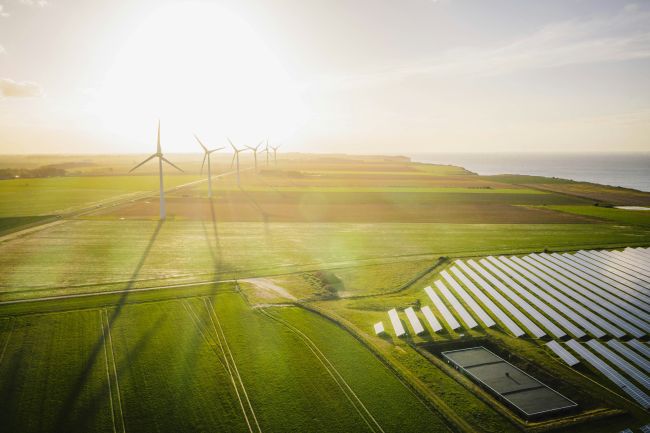
Co-located business models like this could prove profitable for EfW in the UK, and it doesn’t have to stop at heat networks. Facilities are exploring how they can co-locate with data centres, an industry that is set to boom with 29 new projects announced, including Reef Group's 600 MW plan in Havering and the Humber Technology Park's 384 MW project. There is also scope for some facilities to add to their green credentials by adding solar panels and wind turbines on-site.
We will always require a solution to manage waste, and despite negative coverage now, EfW was once seen as a positive alternative to landfill, which emits harmful greenhouse gases in the long run anyway.
While EfW faces an uncertain future due to the variability of carbon pricing and the untested nature of CCUS, waste will always be with us, and as it is, why not put it to good use?
--------------------------------------------
Viet Nguyen is an Associate Director at Amberside Advisors, responsible for leading the team on mandates across renewable energy generation sectors, with particular focus on energy from waste and biogas. With his career spanning appointments at a range of financial advisory specialists, Viet covers a full range of advisory services (Financial Modelling, Model Audit, Valuation, Value Enhancement Analysis/Appraisal, FDD, Buyside/Sellside Advisory, and Greenfield Financing), combined with a decade-long experience working in-house within the waste and biogas industry.
Amberside Advisors specialises in financial & commercial advisory services for infrastructure, renewables, and energy transition. Under Viet's leadership, Amberside Advisors' team has worked on a variety of mandates across EfW and CCUS, including recent FDD support for acquisition of Merseyside Waste PFI/Wilton EfW, as well as Kent Renewable Energy Limited and Westfield Energy Recovery Facility, amongst others, in addition to our 10-year-long mandate as financial advisors to the North London Waste Authority, with more recent additional appointment to advise NLWA on the commercial feasibility and financing for the retrofit of carbon capture technology to the site. Amberside Advisors has held roles on 47% of the UK EfW projects and 58% of the UK EfW sector operating tonnage capacity, with 10mt of Waste projects under our belt. Please reach out to learn about Amberside Advisors’ work in the EfW space and find out how we can support your next project or help refinance your existing assets.