Managing the kerbside: From strategy to street-level impact
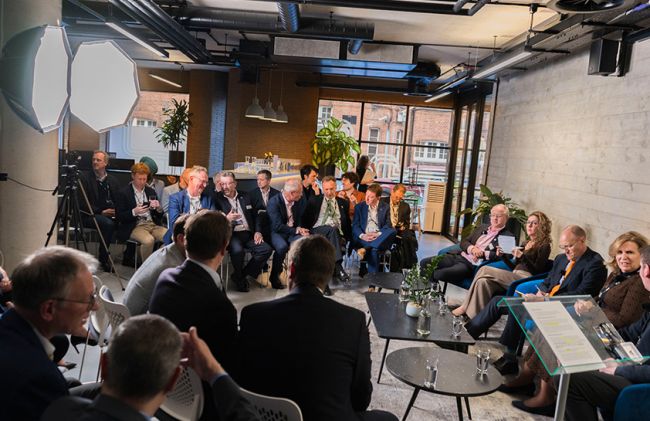
Our latest London Borough Knowledge Exchange brought together officers from across London to explore how boroughs are responding to these pressures and how governance, data and decision-making frameworks are adapting to support more balanced, future-ready streets.


London’s kerbside is under growing strain, expected to accommodate an expanding mix of demands – from freight and servicing to buses, micromobility, EV charging, accessibility and high-quality public realm.
As borough priorities evolve and streets become more contested, the challenge is no longer simply allocating space but managing it dynamically, transparently and in line with wider policy objectives.
Our latest London Borough Knowledge Exchange brought together officers from across London to explore how boroughs are responding to these pressures and how governance, data and decision-making frameworks are adapting to support more balanced, future-ready streets.
Borough spotlight: Lambeth’s Kerbside Strategy
A key session focused on Lambeth Council’s Kerbside Strategy, presented by Tash Hartke, Kerbside Strategy Programme Manager, and Elliot Quinn, Climate Response Strategy Manager.
The strategy sets an ambitious goal to dedicate 25% of kerbside space to sustainable uses by 2030, structured around four priorities: enabling accessible and active travel, creating places for people, increasing climate resilience, and reducing traffic and transport emissions.
The borough is delivering this through a programme of practical measures – including expanded cycle parking, EV charging infrastructure, parklets and street greening – alongside a strong focus on accessibility and monitoring.
Digital tools and data dashboards are helping Lambeth track progress and understand how kerbside space is used over time, with around 10.5% currently allocated to sustainable uses.
Tools and shared insights for managing the kerbside
The event also explored how digital kerbside management tools can support better planning and decision-making. Appyway demonstrated how digitised traffic orders, mapping and dashboards can provide boroughs with a clearer picture of kerbside restrictions and uses, helping authorities analyse demand, manage change requests and track progress against strategic goals.
Roundtable discussions highlighted several shared challenges and emerging approaches. As EV adoption accelerates, boroughs are considering how on-street charging networks scale without undermining other street priorities, with some testing cross-pavement charging channels and others waiting to evaluate trial results. Participants also discussed the growing need to treat shared bikes and e-scooters as permanent transport infrastructure rather than temporary schemes, with a shift underway from pavement parking to carriageway bays and increasing pressure to manage hotspots, particularly at borough boundaries. More broadly, attendees reflected on the difficulty of translating kerbside policy objectives into day-to-day behaviour change. Data was widely recognised as critical for supporting decisions and demonstrating impact, particularly where political support fluctuates or public opposition is strong.
The event also featured a presentation from Sarah Wixey, Associate at Steer, sharing findings from a Transport for London-commissioned study on the accessibility of EV charge points across Greater London. The research assessed around 2,200 public charge points against accessibility criteria informed by engagement with disabled users and commercial vehicle drivers.
Stay connected
The London Borough Knowledge Exchange is an in-person event series designed to bring together officers from across London’s boroughs to share insights, explore challenges and collaborate on solutions to the capital’s most pressing urban issues.
Led by Steer and supported by guest speakers and expert partners, each event focuses on a key theme – from transport and street design to sustainability, community engagement and beyond.
Receive updates, insights, and invitations to future LBKE events by joining the London Borough Knowledge Exchange community.