Demonstrating the value of urban street improvements
As cities rethink how street space is used, traditional transport appraisal falls short. This article explores how broader economic, health, and placemaking benefits can be captured to build compelling business cases for walking, cycling, and urban realm investment.

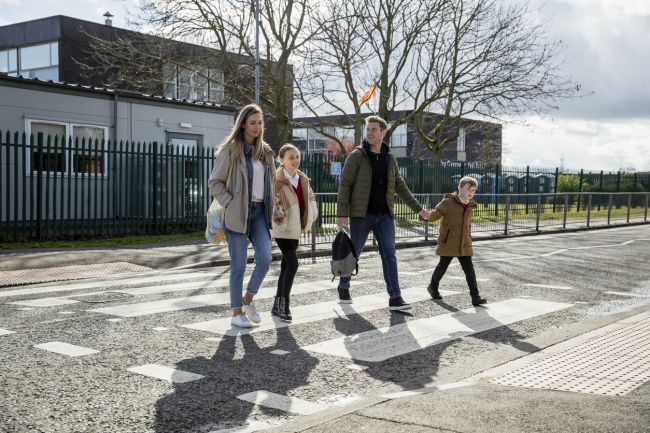
Around the world, people and economic activity are increasingly concentrated in cities, creating increased tension in how limited space on city streets should be used. This is a valuable resource, which in many city cores can comprise more than a quarter of total land area. Conversely, it is increasingly recognized how positive changes to city streets can improve quality of life for residents and visitors. Examples include the Healthy Streets approach in London, and Complete Streets in North America. A common theme is a greater emphasis on the needs of pedestrians and cyclists, as well as the quality of the urban realm.
Moving past the outdated paradigm of designing streets around the needs of motorized vehicles can be a difficult transition. While it is easy to intuitively recognize that more livable streets make cities better places, traditional transportation appraisal tools focus on valuing changes in motorized vehicle journey times. Therefore, innovative and bespoke approaches need to be applied when seeking to capture the benefits of urban realm, walking and cycling projects.
Steer has extensive experience in developing compelling business cases for these types of projects. Our experts are adept at approaching this task in a proportionate way, that draws upon readily available data where possible. We are familiar with the range of relevant tools and techniques to quantify a range of benefits, complementing these with qualitative analysis where appropriate.
Some of the impacts that we commonly take into account when developing business cases for such projects include:
- Health: More walking and cycling leads to greater levels of physical activity, which can reduce mortality. This benefit is readily quantified using the World Health Organization (WHO) Health Economic Assessment Tool (HEAT). For example, we applied this tool to help make the case for a £30 million investment in cycling improvements in Kingston in south-west London.
- Air quality: Fewer trips in motorized vehicles can also reduce local emissions of harmful airborne pollutants. It can be difficult to monetize this benefit without expensive air quality modeling. For our business case work on Oxford Street in London, we developed a bespoke approach that innovatively combined available data to quantify air quality impacts on pedestrians, residents and employees.
- Ambience: An improved street environment that is less dominated by motorized vehicles is a more pleasant place to spend time in. We often draw on stated preference surveys to estimate users’ willingness-to-pay for such improvements. For example, we are currently working with New York City to conduct surveys to estimate willingness-to-pay for street improvements.
- Local economy: Attracting people to visit and spend more time on high streets can also benefit the local economy. For example, in our business case for Oxford Street in London, we drew on available data on retail spending, employment and land use to illustratively demonstrate how the local economy would benefit from proposed urban realm improvements.
- Severance: Reducing the severance caused by roads helps to bring communities together. This can be valued by using the findings of recent research that has been conducted by University College London (UCL).
- Other benefits: There can also be a range of other benefits that are difficult to quantify but are still worth including qualitatively. For one public realm project in a part of London hosting world-class educational and cultural institutions, we obtained qualitative evidence from these organizations on how the project would enable greater collaboration to take place. In Toronto, drawing on market research we demonstrated the benefit of the TO360 wayfinding strategy.
By drawing together various benefits of city street improvement projects, we have often been able to demonstrate that they are very high compared to the costs of such projects. This is complemented by benefits that are described more qualitatively or illustratively, that further strengthen the case. Put together in a business case, this type of economic appraisal can be used to secure funding by reassuring decision-makers that investments in making city streets better for people are worthwhile.