Is COVID-19 a temporary or lasting remedy for our ‘freight blindness’?
Could changes to our delivery system since the pandemic lead to a new acknowledgement for the freight system?

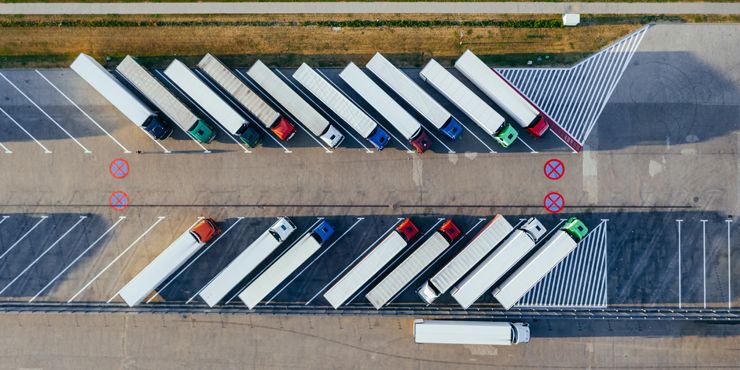
From 2018 to 2019, I worked at the National Infrastructure Commission on the Future of Freight study. I was privileged to be part of the team that delved into the detail with the freight industry, consulted with central, sub-national and local government, engaged consultants, and ran the analysis on everything from whether wharves are adequately safeguarded to what proportion of parcel deliveries could be made by drone. The final report, “Better Delivery: the challenge for freight”, includes the Commission’s recommendations to government on how the UK’s freight system should change, so it continues to keep pace with the world around it.
In the Commission’s interim report we accused everyone – government, local authorities, planners, the general population – of ‘freight blindness’, suggesting that, because we often do not ‘see’ the freight system in action, we are not placing sufficient value on the things that an efficient freight system needs to work well. How times have changed. The freight sector is currently engaged in heroic, wartime-like operations to keep us fed and watered, and we’re applauding the efforts of delivery drivers from our windows and balconies. Even if we still don’t understand the complex supply chains that keep supermarket shelves stocked and deliveries arriving on our doorsteps, we are at least edging away from taking it for granted.
I’m interested in some of the emergency measures that have been brought in to help optimise supply chains in this time of crisis. One of the first I saw was the relaxation of restrictions on when supermarket deliveries could take place, allowing more deliveries overnight, and stock to flow more quickly from warehouses to shelves. Local authorities set these restrictions to protect sleeping residents from noise disturbance, but different restrictions apply in different streets, with many outright bans on overnight deliveries. This means that supply chain managers have to navigate a complex web of rules to run operations overnight when the roads are far less busy. As these rules are set at a local level, a coordinated approach to the relaxation of overnight restrictions was previously in the ‘too difficult’ pile.
Local residents will be more tolerant of any overnight delivery noise while there’s still a risk that supermarket shelves could run empty, but if the relaxation of restrictions continues to apply for a short period once we return to business as usual it will be useful to see where residents are genuinely affected by noisy deliveries and navigate accordingly, rather than wholesale return to the current system.
I’ve also seen reports that with the railways operating a significantly reduced passenger service there’s the opportunity to carry far more rail freight. By early April, freight operators were running longer trains: one advantage over road haulage is that they require far fewer drivers and are able to maintain a reliable service even if some drivers are self-isolating.
When I was working on the Freight Study at the National Infrastructure Commission, we knew that capacity for passenger services was untouchable, and that the rail freight sector had to negotiate hard to receive a fraction of the paths it wanted. We can’t be sure how passenger travel demand will change as a result of the COVID-19 crisis, but if we consider a situation in which people travel less overall, less frequently and for shorter distances than they did before, it may be that there is more capacity on the railways for freight.
Air freight normally contributes to disaster relief because it is the fastest way of delivering life-saving materials. In the past, this has included tents, clothing and food, but in the current crisis, the focus has been protective clothing and medical equipment. Normally, most air freight at Heathrow arrives in the belly holds of passenger planes, but in their absence, there has been a massive increase in the number of dedicated cargo flights, from an average of 47 a week to as many as 38 on a single day. In addition, some passenger aircraft have been used to provide additional capacity. The NHS and the Department of Health chartered a Virgin Atlantic Boeing 787 to bring over 750,000 items of personal protective equipment (PPE) from Shanghai, stowed in the hold, on seats and even in the overhead lockers.
Despite these rapid adjustments to deal with immediate and urgent needs, we must not lose sight of the decarbonisation challenge – the climate crisis is neither solved nor on hold. The Commission calls for a “clean freight revolution”, with a recommendation that the pathway to decarbonised road and rail freight is mapped out within the next couple of years, with both to be zero carbon by 2050. It is simply too early to make a call on what future technology could deliver – but, as the Commission argues, it’s imperative that we start tackling issues now. New infrastructure takes years, if not decades to deliver.
Like everyone, I’m fascinated to see what the new ‘normal’ will look like once we are on the other side of lockdown. I’m hopeful that COVID-19 is the trigger for a new acknowledgement and respect for the freight system and a significant step towards an understanding of what is needed from government, local authorities and planners to support it as it continues to deliver for us all.